🍓Strawberry Tips

Strawberry Season starts late May and lasts for about 4 weeks.

Rules

  • Do NOT throw the berries.
  • Children must be monitored at all times.
  • As with other fruit, sampling is OK, but gluttony is theft.  We want you to know what you are picking, but please do not eat more than a few. 
  • Do not wander to other fields.  Only pick the fruit that is advertised as being ripe.
  • It is OK to sit a short while and enjoy our farm.  But please understand that we are not a park, and need to cover our costs by selling food.

How to Pick the Best Berry!

  • Color is a primary indicator of ripeness.  If it isn’t red, it isn’t ripe.
  • Go for berries that are red all the way to the tip.
  • Pale or white shoulders = underripe (they won’t get sweeter later).
  • They should feel firm but not hard.
  • Mushy spots = overripe or starting to spoil.

Pro Tip: Smaller strawberries often pack more flavor than the giant show-offs!

After Picking Care

  • Washing is always recommended before eating fruit. 
  • Make sure the berries are fully dry before putting them in an air tight container in your fridge.
  • You can even place a towel at the bottom of your container to catch any lingering moisture.
  • First, wash and dry them, then cap the berries (slice off the green foliage),

Freezing Instructions

If you wish to freeze your strawberries;

  1. First, properly wash and dry you berries as instructed above
  2. Next, cap the berries (slice off the leafy crown and bit of white flesh). Feel free to even slice or dice them at this point.
  3. Then, lay them out on a baking sheet, make sure they aren’t touching.
  4. After that, place the baking sheet in a freezer overnight.
  5. Finally, scoop them into a plastic bag or container of your choosing.

You now have berries that will keep for up to a year and can be used for pies, jam/jelly, or any baked good of your choosing!

Varieties

  • Earliglow – Small to medium, very early, the “reference” berry for great taste!
  • Flavorfest – Medium to large, firm, very sweet, developed in Maryland
  • Keepsake – A new improved version of Flavorfest, developed by USDA in Maryland
  • AC Wendy – Medium to large, sweet mid-season berry
  • AC Valley Sunset – Large, glossy red, sweet. Late season berry
🫐Blueberry Tips

Blueberry season starts in mid June and lasts for about 6 weeks.

Rules

  • Do NOT throw berries
  • Children must be monitored
  • As with other fruit, sampling is OK, but gluttony is theft.  We want you to know what you are picking, but please do not eat more than a few.  After all, you wouldn’t do it in Walmart, right?
  • Do not wander to other fields.   Only pick the fruit that is advertised as being ripe.
  • It is OK to sit a short while and enjoy our farm.  But please understand that we are not a park, and need to cover our costs by selling food.  We do not want to have to charge admission.

How to pick a good berry

Color is a primary indicator of ripeness.  If it isn’t blue, it isn’t ripe.

But just because it is blue doesn’t mean it is particularly sweet.  Like other fruits, the riper it is, the sweeter.   Like many other fruits, it is at peak sweetness just before it falls from the bush.   So we suggest holding your bucket under a cluster and gently rubbing your thumb across the top of the blueberry to encourage it to fall off.  The easier it comes away, the less tart it will be.

Late in the season, don’t be discouraged by small berries.  They are often the sweetest as they have had time to ripen completely and sweeten in the mid-summer sun.

After picking

Washing is always recommended before eating fruit. 

Refrigeration is highly recommended to keep your berries for a short time.

If you want to save your berries for more than a week or two, freeze dry berries in a single layer on a sheet tray.  After frozen, transfer to a freezer-safe ziplock or other container.  Individual frozen berries are a great treat!

Varieties:

  • Our first variety of the season is Duke (next to the road).  It lasts for about 3 weeks and is super easy to pick with lots of berries from toddler height to 5 feet.
  • Our second variety is Bluecrop (next to raspberries).  This is a tasty variety that usually has a large yield.  It is one of the industry standards.
  • Our third variety is Chandler.  This is a very large – and tasty! – blueberry.  Look for it near the top of “patch three”, which is above the Bluecrop.

After 2020…

A previous post covered the “bad” from 2020. This one is more about the “good.”

You may be surprised that there was any good to last year. But if you visited our farm, I hope you made some happy memories.

As the virus spread in the spring, we had no idea what to expect from the the 2020 marketing season. But we knew that if people were going to come out to the orchard, they would want to feel safe. So we focused on the things we could control that would keep people safe and help them have fun on the farm.

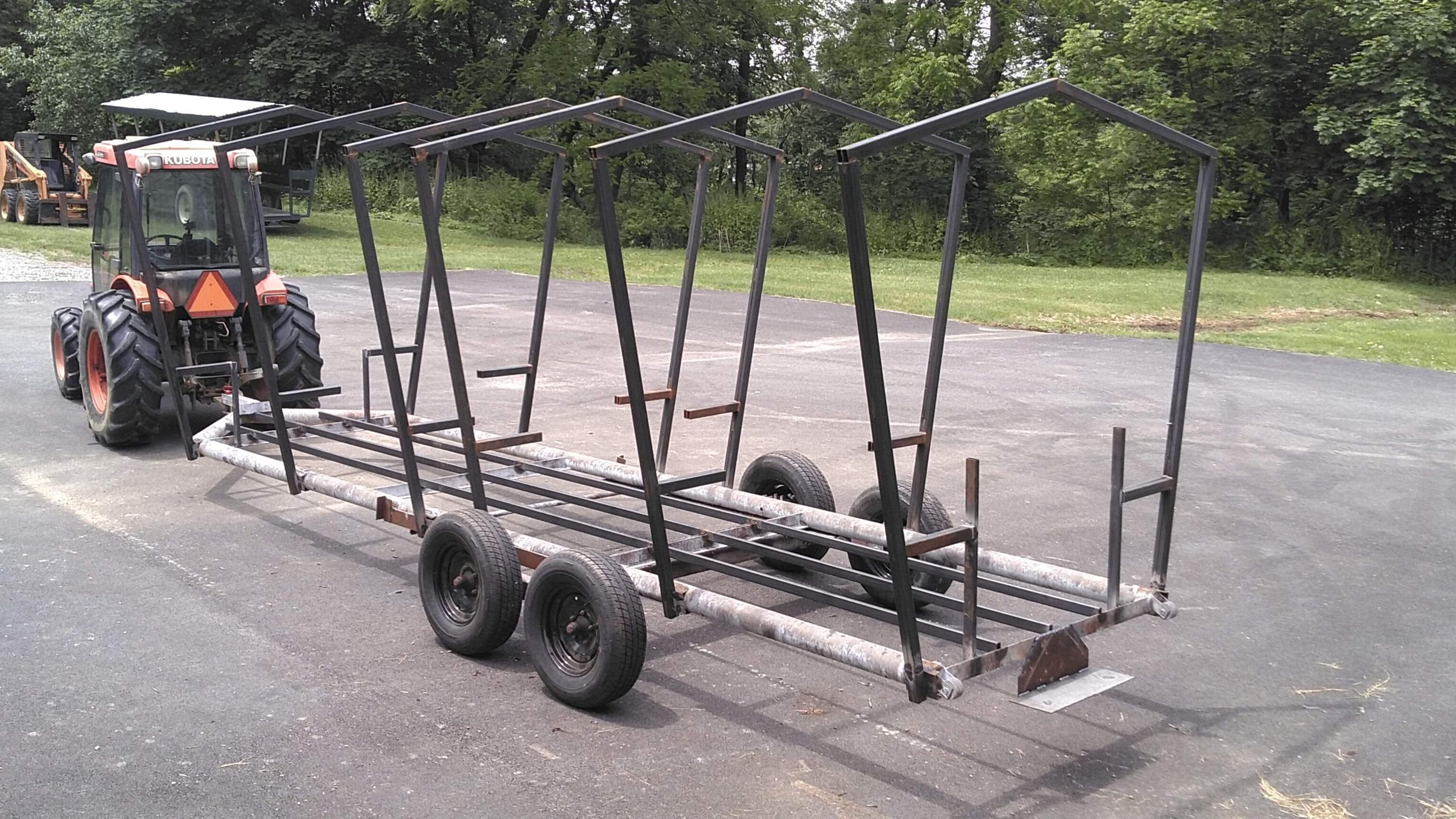
I had long thought about using an old oversized wagon frame as the base for a new “people-mover.” This was the year to do it. We removed a dying 100-year old oak tree from the market area and had it sawn into heavy lumber. A local welder provided some scrap steel. We repurposed parts of our old market roof, and soon we had a very nice *large* wagon to help move people around the fields.

Old parts -and new- come together to make a new wagon

A new retail point-of-sale system provided us with the flexibility to take payments in the strawberry fields, helping to eliminate any unnecessary lines in the market. And we reallocated acreage for weekday pick-your-own so that people could come pick apples during non-peak times. Our retail staff braved the hottest summer on record, without air conditioning, behind masks.

And all these efforts appeared to pay off. Our retail and pick-your-own business was very busy this year with positive feedback on our efforts.

My hope is that people will cherish some of the good from 2020. A trip to the orchard is more than just a way to put good food on the table, it is a great way to make memories with people you love. And that’s worth remembering.

2020 – A year to forget… and remember

It goes without saying that 2020 will long be remembered. A once-in-a-century pandemic, the economic collapse, political and social unrest… they all contributed to a pretty ugly year.

What many people won’t remember from all the chaos is more record-setting weather here in the mid-Atlantic. The strange pattern started at the beginning of the year with the sixth warmest winter on record, with record daily highs in January, abnormally cool April, with a record cold day on May 9, followed by a very dry July with a single rainfall that dropped a month’s worth of precipitation in less than an hour, the hottest summer on record, and culminated in December with a record span of days without snow. That’s a lot of extremes in one paragraph.

As you might guess, this kind of volatility is not good for farmers, especially specialty crop growers like me. Our apricots bloomed this year in early March, but lacked the heat they needed to fully develop. We lost them all by May. We lost more than half of our strawberry and cherry production in the April freeze. Our peaches made it through an April frost only to lose 2/3 of the crop to the record May freeze. Even with the record warmth over the winter, our apples bloomed late, but most of the crop was lost to the freeze in April. The apple loss was especially interesting because the low temperature observed that night was actually in a range that the academic literature suggested was survivable; however, the trees were so stressed from “waiting” for the warm weather that many otherwise viable buds were lost.

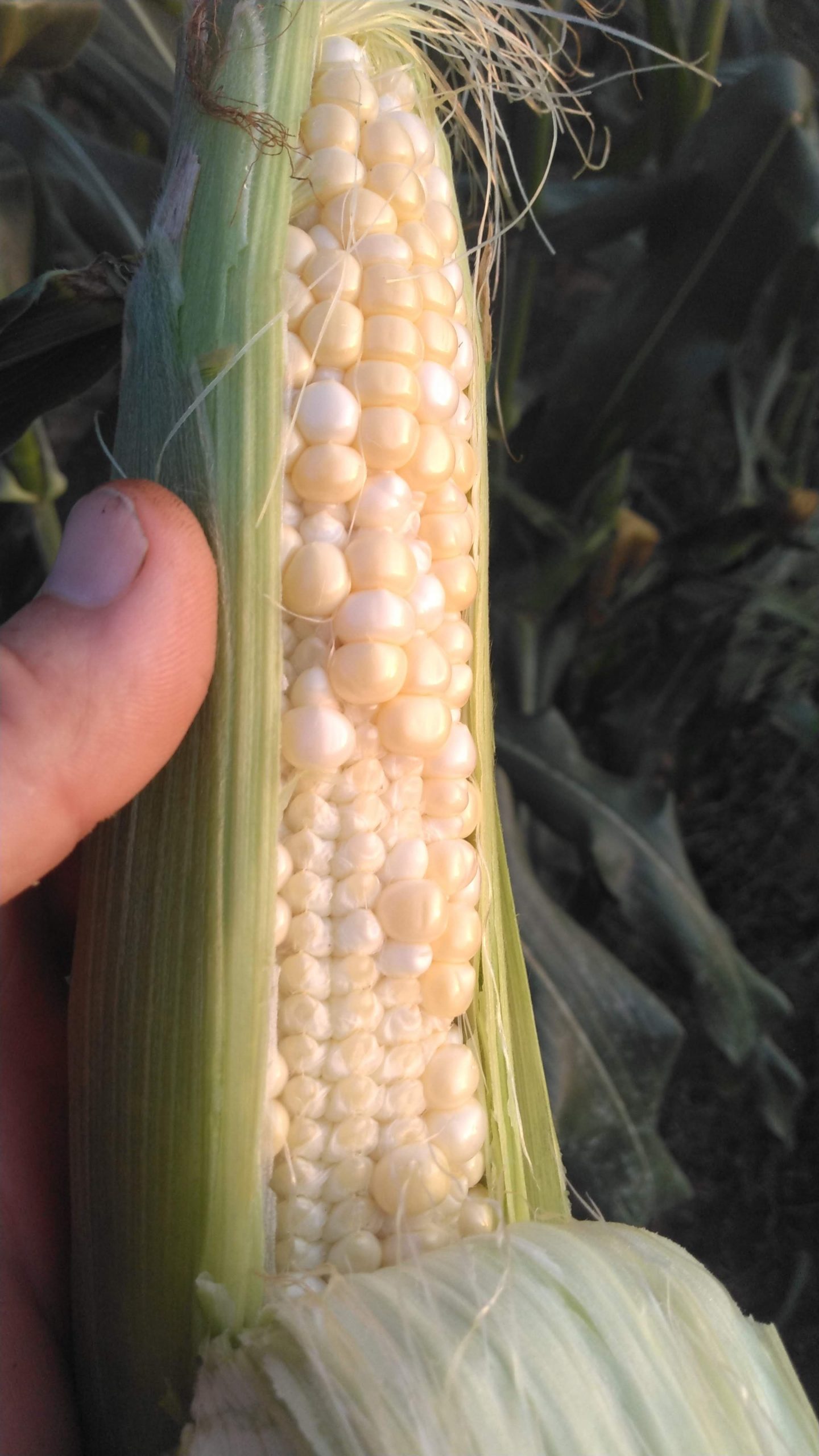
As the summer progressed we started seeing summertime losses too. Our sweet corn this year was irrigated and well-maintained. Customers may have noticed that it was perhaps the sweetest corn we’ve ever grown; but what they didn’t see was that the yield was down and some ears misshapen because of extreme heat.

We lost not one, but two plantings of kiwiberries this year. The first was lost to the May freeze (despite row coverings), and the second was apparently lost to drought over the summer. I blame myself for the second loss for not putting the same energy into irrigation under the plants, as I did for the trellis above them. Live and Learn.

All this is to say that 2020 was a very tough growing year.

So I heard about this new apple…

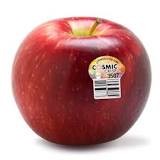
You probably have heard about Cosmic Crisp.  It is a new variety of apple that will soon be popping up in just about every major grocery store.  At its launch this winter it will ship millions of bushels, and be supported by millions of dollars of advertising.  You will be told that it is an improvement on its parent: Honeycrisp.

What you won’t be told is that your local orchard can’t grow it.

Not because it won’t grow in this climate, and not because we wouldn’t like to plant it.  The reason we can’t grow it here is that we are legally prevented from planting it.  Cosmic Crisp was developed in Washington State, and the fruit growers there have maintained exclusive rights to plant and market Cosmic Crisp.  No one outside the state is allowed to grow it.

This is just the latest example of a trend that has been developing over the last decade.  You’ve probably heard of Jazz, Kiku, SweeTango, Opal, SnapDragon, or Evercrisp, There are about 30 varieties of apples now that are not freely available for growers to plant.  They are protected by “clubs”, patents, marketing arrangements, and other methods designed by lawyers to maintain close ownership of the varieties.  As a mid-Atlantic grower, I can buy my way into some of these arrangements if I like, but other clubs are completely closed to me: like Cosmic Crisp.  (There is a great article from NPR on this topic here.  The situation has only worsened since it was written.)

This close control is intended to ensure quality, limit supply, provide funds for investment in development and marketing, and to provide an aura of exclusivity.  But it carries an incredible risk for growers, because of this I am certain: there is not enough shelf space at the grocery to carry all of these varieties, and all of those varieties will be competing against each other.

The number one risk in growing apples is not weather, not disease, not insects, and not labor.  The number one long-term risk for apples is price collapse because of lack of demand for the variety.  The timeline for apple maturity is so long, the capital establishment expense so high, and the variable cost of production so great that only a high price for a high yield over a long period will justify the planting.  Yields and longevity can be managed, but wholesale prices cannot.

Ironically, the apple suffering the most from this onslaught of new varieties provides a template for how growers should be approaching the future.  Red Delicious became popular not because it was the best tasting variety, but because a critical mass of growers in the Northeast got together and decided that the hundreds (literally) of varieties that they were trying to sell could not possibly be managed in the marketplace.  Red Delicious was pretty, grew well across climates, and tasted good enough that everybody could make money on it as long as they stuck together.

It won’t take long for everyone (except Washington State) to realize this impending cliff, and the Red Delicious-inspired solution.  I suspect that sometime in the near future, the walls will come tumbling down as the marketing czars realize that they don’t have the critical mass to compete with Washington State, which produces most of the apples sold in the US.  The supply-side market will determine which new varieties will win.  And growers stuck with the wrong varieties may very well end up broke.

As for me, I will grow a few of these new varieties when I can.  They ALL taste great, and will be a welcome addition in our farm market to compliment some of the old varieties that continue to stand up well: like Cameo, Stayman, Jonagold, and Macoun.

Just don’t expect to see any Cosmic Crisp.


Where do those beautiful tomatoes come from?

Sometimes I have to admit my limitations.  Not often, but sometimes.

Tomatoes are one of the crops I’ve considered growing.  The local auction prices for tomatoes often far exceed the cost of tree fruit.  It bothers me that something planted as a seed in the spring can be worth more than the fruit of a tree that needs to be tended its entire life.  So it sometimes seems like easy money to grow tomatoes.

Except that we buy our tomatoes from Daniel Lapp.

Daniel is an Amish neighbor.  He grows the most beautiful tomatoes around, and uses the proceeds to help support his large family.  They don’t deliver the tomatoes for us, but secretly we all enjoy the trip over to Daniel’s house to pick them up.  Driving past the well-tended gardens and farm buildings, the children always greet us with bare feet and a smile, and quickly and efficiently sort the tomatoes and load the car for us.  All transactions are cash.  Our prices are largely fixed through the season despite volatile auction prices, and we have never had a disagreement with him.

I could not grown a better tomato myself, and why should I try?  Daniel makes an honest living from growing food.  Just like I try to do.  I’m happy to help support him and his family.

So the next time you buy a Shaw tomato, please know that it is not a Shaw tomato.  It is a Lapp tomato, and you are helping to support a good family.

A slow start

Fruit Growers are fond of saying “Every year is different.”  And there is some truth to that.  Like last year, March was significantly cooler than February, which is highly unusual.  The mean temperature on our farm was actually 4 degrees LOWER in March than February.  But April has also been well below normal.  Many years, we are deep into the bloom season by now, but this year, the only growth on the trees occurred last week when we had 3 days that were nearly 20 degrees above normal.  The apple trees took the opportunity to grow an amazing 1.5″ of leaves in just two days.

And now the trees are shivering with expected lows below freezing.  The apricots have already bloomed, the plums are just past peak, and some varieties of peaches are blooming.  So a freeze tonight will likely take some of the fruit, which isn’t necessarily a bad thing since we spend a lot of time thinning extra fruit anyway.

Strawberries are running way behind schedule.  It seems likely to me that we will miss our usual Memorial Day opening this year.  In fact, based on the short term forecast, we might not be open by the weekend after that.

Whatever happens, we’ll deal with it.  But normal would be nice for a change.

Pick your own DO’s and DON’T’s

We do a lot of business with pick-your-own.  In fact, it has become the core of our retail offerings.  To help you get the most out of your experience, here are a few tips:

DO:  Come prepared.  You probably don’t need hip boots in our well manicured fields.  But high heels are not a good idea (don’t laugh, we see it pretty often).  A hat is also a good idea for berry picking.  Sunscreen is advisable.

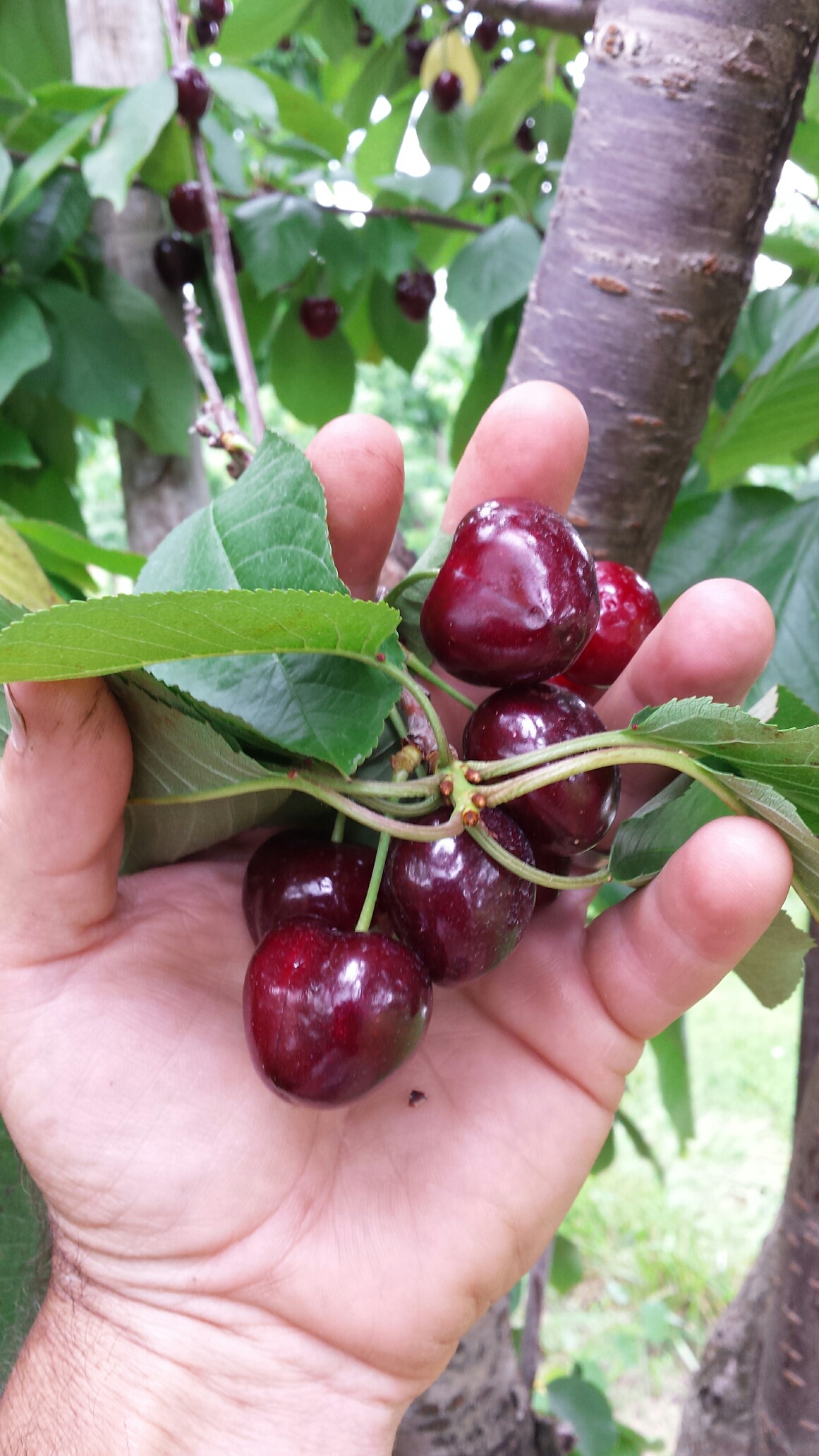
Beautiful cherries from 2015

DO:  Come early in the day.  Several reasons:  1) it gets hot in the afternoon; 2) the morning light gets under the vegetation (on the eastern side) to make it easy to see; 3) you’ll beat the crowds and have easier picking.

DON’T:  Stop at the first sight of fruit.  Chances are good, everybody else stopped there too and already picked the good stuff.  Spend a few minutes wandering around so you know if you are in a good spot.

DO:  Try a bite.  Yes, you technically should wash your food before you eat it; but we never use any chemicals within the designated “pre-harvest interval.”  Which means you don’t need to worry about residues.  And since the BIGGEST factor in a fruit’s flavor is its degree of ripeness, you’ll want to learn quickly how to know by sight how ripe the fruit is.  And the best way to learn is trial and error.  In short, we want you to harvest the fruit you think tastes best.

DON’T:  Eat all our profits without paying for them.  As we say, “sampling is encouraged, gluttony is theft.”  You wouldn’t eat your way through the local grocery store would you?  Why would you do it to your local farmer?  Seriously, we ask these kind of customers to leave.

DO and DON’T:  Enjoy your stay, but don’t stay all day.  This is tricky for us: we are an authentic family farm with wide open spaces and a laid-back approach to crowd control.  But if everyone spread a picnic blanket under every tree, it would be more like a city park than a farm.  We want to be a farm.  So you are welcome to have lunch at our picnic tables, and we want your kids to run and do cartwheels, but please be mindful that we are not a park.

DO:  Ask an employee for advice on the varieties, and the best places to pick.

DO: If picking a fruit that is sold by weight (not apples), feel free to bring a container if you like your container.  Or use the ones we have available.

Yep. We love our bees!

Farmers get a lot of bad press about their relationship with bees.  Some of that is deserved.  But don’t believe everything you read on Facebook.

We rely EXCLUSIVELY on native pollinators to turn pretty flowers into money making fruit every spring.  You may be surprised to know that the majority of this work is done by bees and insects other than the honeybee.  Bumble bees, sweat bees, Japanese orchard bees… the list goes on.  They all live within flying distance of our orchards, and in many cases live within several hundred yards of the orchards.

We manage this in several ways.  First, we provide habitat for these bees.  Most of our orchards are within sight of woods and creek beds where many native pollinators like to nest.  We also frequently provide pollinator friendly cover crops or wildflowers where they can store up energy when our orchards or bushes aren’t blooming.  (See the video on cover crops here.)

Secondly, we try really hard not to hurt our pollinators by spraying the wrong chemical at the wrong time.  Our climate forces us to manage a multitude of pests by spraying insecticides.  In the old days, we would use an insecticide that killed most insects.  Today’s integrated pest management approach uses a more targeted method to spray a narrow spectrum insecticide for just the pest that is there.

Here is where the social media knowledge gap lies.  Neonicitoid insecticides are systemic in the plant to eliminate insects that are sucking or chewing on the trees.  Since bees and predator insects don’t eat our trees, they don’t get killed, even if they visit the orchard after a spray.  Moreover, in most commercial orchards, their exposure is very low because we don’t use this kind of systemic chemical until after the bloom is done.  So they aren’t getting exposed through the pollen.

If neonics’ were taken off the market, we’d be forced to move back to classes of chemicals that are even more lethal to predators, and it would be a setback for the current balanced approach that we have to managing our insect populations.

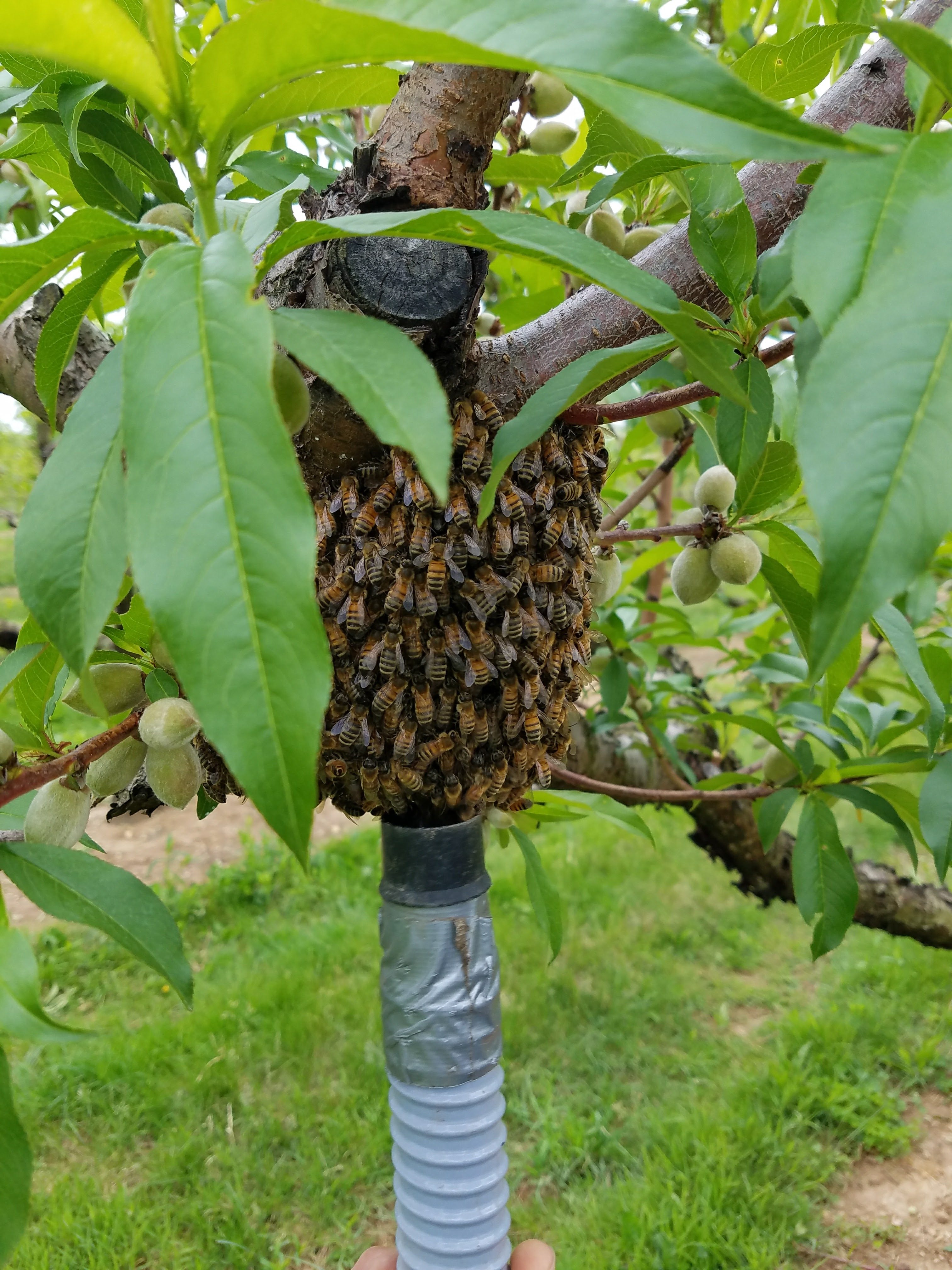
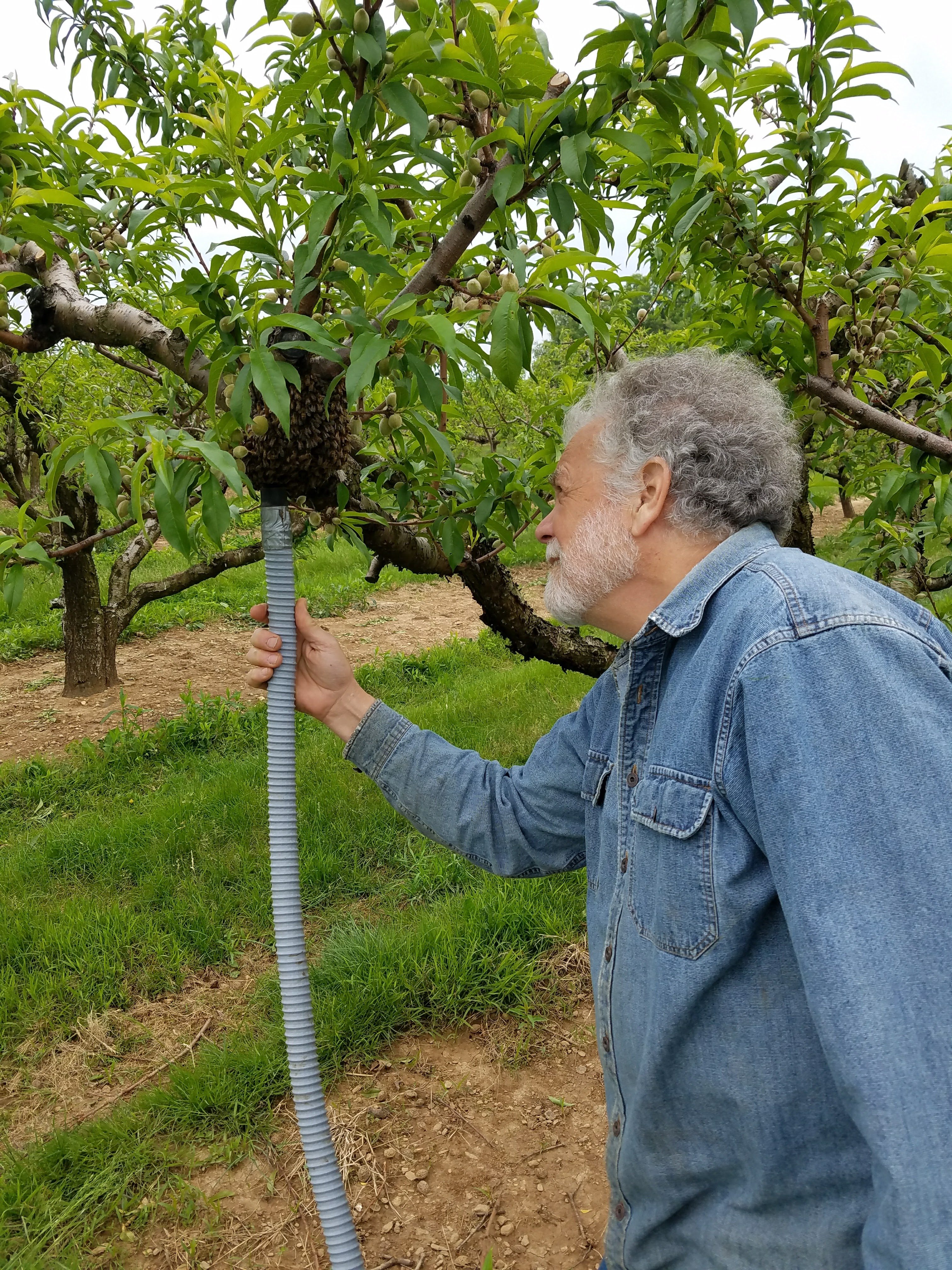
Still wonder whether the bees are safe?  Here are some pictures of a swarm of honeybees in one of our peach trees.  Our friendly neighborhood bee keeper is using a vacuum device to move them into a holding box, and then into a hive.  Even though we rely on these guys for our pollination, they stand a better chance of setting up a new colony with his care.  But they are welcome to come back and visit!


Another unusual winter

Winter?  What winter?

So far this has been the least snowy winter we’ve ever had.  We’ve had less than 6″ of snow here all season.  But even worse than the dearth of snow has been the warm temperatures since January.  The average temperature has been well above normal, so much so that we’re seeing record dates for early blooming trees.

We heard our first spring peeper frogs on 2/28, an incredible week ahead of last years’ record.  Apricots started blooming yesterday a week ahead of their record from 2012 (the year that most of the orchards east of the Mississippi lost their crops because of the weather).  Plums are at a very delicate bud stage, but not yet blooming.  Cherries, peaches, and apples remain tight.

And tight is good, because the weather roller coaster is headed downhill fast.  It snowed last night, and low temperatures are forecasted to be in the teens for the next few nights.  A significant snow storm is on tap for next week.  The good news here is that the sudden cool weather may have arrived just in time to slow the rest of the trees.

Time will tell…